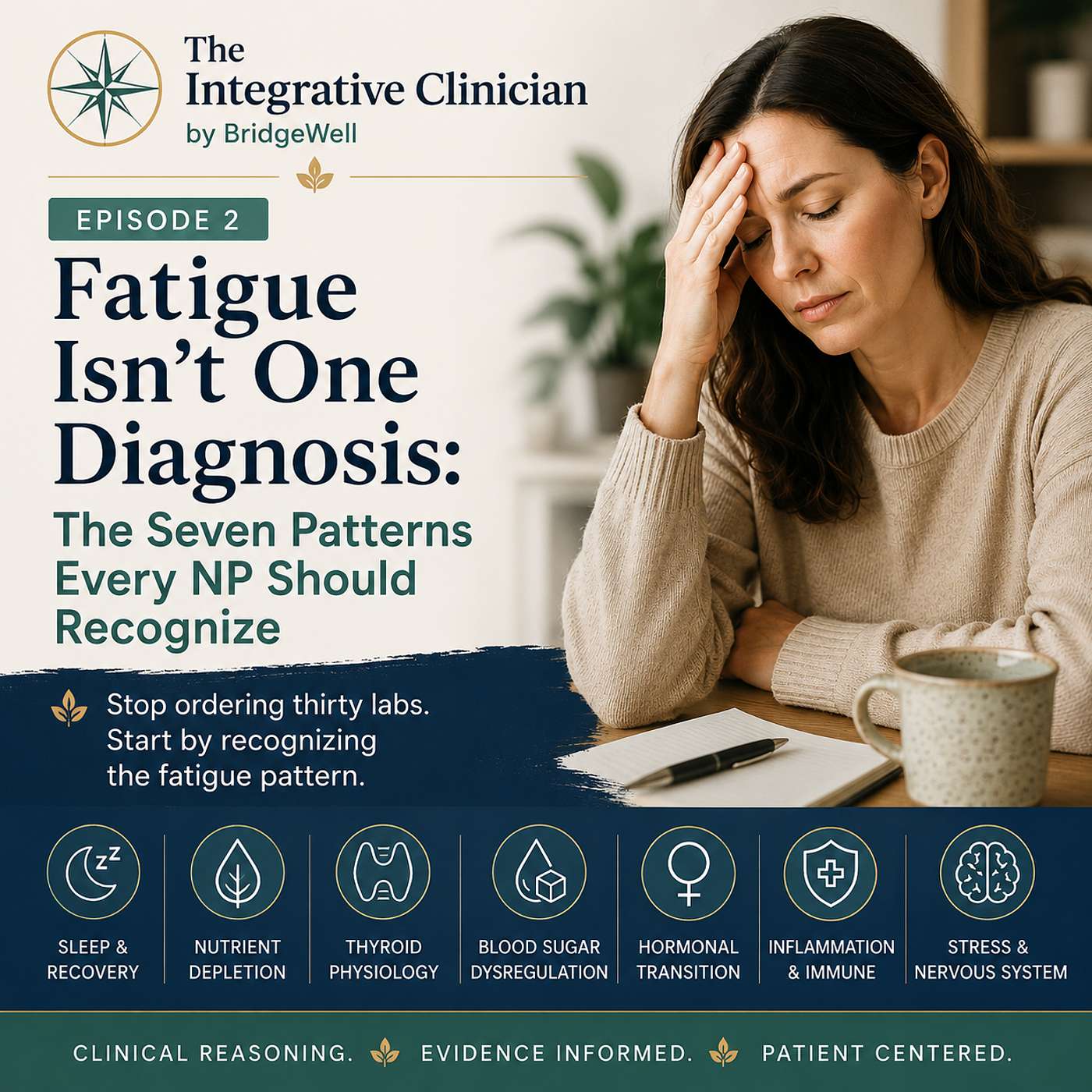
12 high-yield integrative intake questions for nurse practitioners, organized by system, to clarify patterns and change your differential fast.
The first integrative-style visit is not about doing everything. It is about asking questions that change what you think is happening, so your plan becomes targeted rather than generic.
The Goal: Questions That Create Clinical Leverage
A good question does one of three things: narrows your differential, reveals a pattern driver, or identifies the most realistic first step. Here are 12 high-yield questions organized for speed.
Sleep and Circadian
- What time do you fall asleep and wake up on workdays vs weekends?
- Do you wake refreshed, or tired no matter what?
Energy and Metabolism
- When do you crash, morning, afternoon, evening?
- What happens if you skip breakfast?
GI and Tolerance
- What foods reliably worsen symptoms?
- What are your bowels like most days (frequency and form)?
Stress and Nervous System
- What has your stress load looked like in the last 6 to 12 months?
- Do you feel “tired and wired”?
Inflammation and Recovery
- How long does it take you to recover from a tough week, workout, or illness?
- Any new or worsening pain patterns?
Women’s Health (if applicable)
- Any cycle changes, PMS shifts, heavier bleeding, or new headaches?
Medication and Supplements
- What did you start or stop in the last year, including supplements?
How to Use the Answers Without Going Down Rabbit Holes
After these questions, write one sentence:
“Most consistent pattern suggests ___; first lever to move is ___.”
That sentence keeps you grounded. It prevents the visit from sprawling into a two-hour deep dive on the first encounter. It gives you a clear starting point and a clear next step, which is all you need to practice differently from the one you just finished.
What to Do This Week
Try using just five of these questions in your next visit and see how much your differential tightens. Then add five more. By the third week, these will feel like the way you have always practiced, because they build on clinical instincts you already have.